
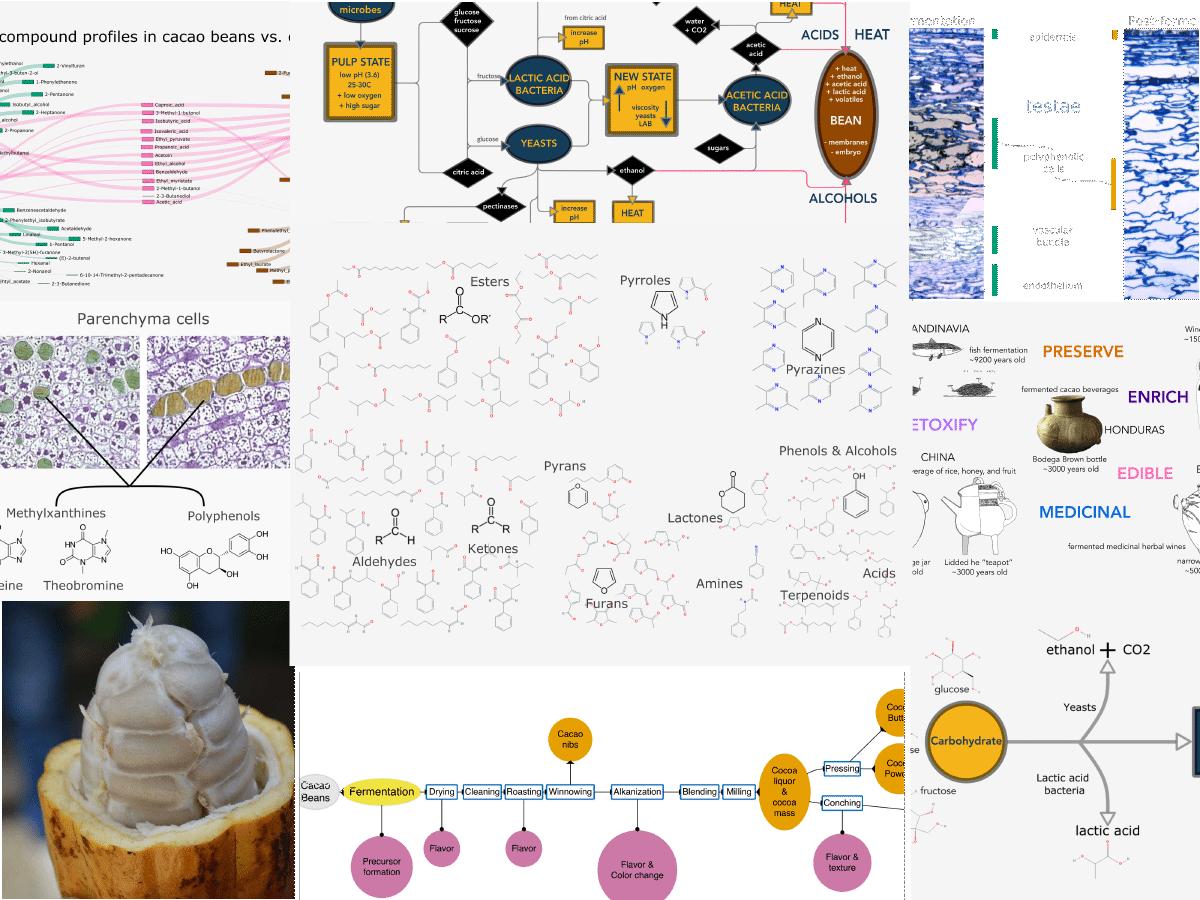
WE ARE IN THE MIDST OF A REVOLUTION that is changing our understanding of the natural world. Spurred in part by recent advances in sequencing and computational capabilities, we are poised to fully integrate the deeply rooted principles of evolutionary ecology with the mechanistic approaches of molecular biology. Nowhere have the implications of this union been more pronounced than in the field of microbial ecology (Martiny et al. 2006Martiny et al. (2006). Microbial biogeography: putting microorganisms on the map; Prosser et al. 2007Prosser et al. (2007). The role of ecological theory in microbial ecology). Ongoing work is revealing that taxonomic and metabolic diversity is far greater than previously thought (Hug et al. 2016Hug et al. (2016). A new view of the tree of life). There is also emerging evidence that microbial communities are not random assortments solely recruited from their surroundings; instead they form microbiomes—functionally unified assemblages adapted to specific habitats (Tyson et al. 2004Tyson et al. (2004). Community structure and metabolism through reconstruction of microbial genomes from the environment). The structure of these microbiomes can profoundly affect host biology (McFall-Ngai et al. 2013McFall-Ngai et al. (2013). Animals in a bacterial world, a new imperative for the life sciences) and biogeochemical cycles (Falkowski et al. 2008Falkowski et al. (2008). The microbial engines that drive Earth's biogeochemical cycles). We are only just beginning to grasp the magnitude of this diversity and understand its connection to ecosystem function and evolutionary processes. Microbial ecology as a discipline and philosophy sits at a developmental crossroad.
Our understanding of the natural world is rooted in humanity’s rich and ancient history of observing and describing biological forms. More than 40,000 years ago people were cataloging natural systems and immortalizing what they saw in exquisite works of art on cave walls (Pike et al. 2012Pike et al. (2012). U-Series dating of paleolithic art in 11 caves in Spain). Over time, sophisticated institutions of natural history developed (Egerton 2002Egerton (2002). A History of the Ecological Sciences, Part 5: Byzantine Natural History), ultimately coalescing into the unified fields of ecology and evolutionary biology (Benson 2000Benson (2000). The emergence of ecology from natural history). There is a logical progression to this development of thought—we observe the natural world, identify the patterns of diversity, discover the processes that give rise to the patterns, and uncover the mechanisms that cause both pattern and process (Anand 1994Anand (1994). Pattern, process and mechanism - the fundamentals of scientific inquiry applied to vegetation science).
In contrast, our relationship with microscopic life unfolded quite differently and much more rapidly (see Appendix 1). Almost overnight, an entirely new world opened, one that is both orders of magnitude more diverse and less familiar. Our perception of this world is not based on visible structures and observable phenomena, but on strings of base pair sequences extracted from the environment and put together like an enormous jigsaw puzzle. However, microbial ecology lacks a unified theoretical framework to deal with this sudden accumulation of unfamiliar data (Prosser et al. 2007Prosser et al. (2007). The role of ecological theory in microbial ecology). So, we adopt and adapt established ecological theory and apply it to our microbial puzzle.
Here’s the kicker: microbes are (mostly) asexual, small, fast growing, and have greater dispersal potential, compared to the majority of plants and animals. Microbial genomes are streamlined—small and densely packed with protein coding genes (Sela et al. 2016Sela et al. (2016). Theory of prokaryotic genome evolution)—and routinely acquire novel traits through horizontal gene transfer (Gogarten & Townsend 2005Gogarten & Townsend (2005). Horizontal gene transfer, genome innovation and evolution). Many phenomena—intra- and interspecific interactions, trophic relationships, niche partitioning—that form the basis of ecological theory are poorly understood for microbes (Jessup et al. 2004Jessup et al. (2004). Big questions, small worlds: microbial model systems in ecology). The species concept itself is largely absent and there is debate whether such a concept even exists (Ereshefsky 2010Ereshefsky (2010). Microbiology and the species problem). Thus, it is important to ask whether established ecological theory is applicable to microbes. Where can existing theory be tested to explain microbial diversity, and where do new theoretical constructs need to be developed? The opportunity for discovery and the chance to be a part of a new way of looking at the natural world makes this an amazing time to be a biologist.
Study the past if you would define the future
-Confucius
THE HISTORY OF MICROBIOLOGY is not only an intellectual curiosity but can also guide as we develop a new scientific discipline and help us better understand how microbial processes fit our current models. In some cases, we may have to rethink established paradigms, while in others microbes may shed new light on old mysteries. Either way, it will be an interesting ride. So before we look ahead lets take a look at how we got here in the first place.
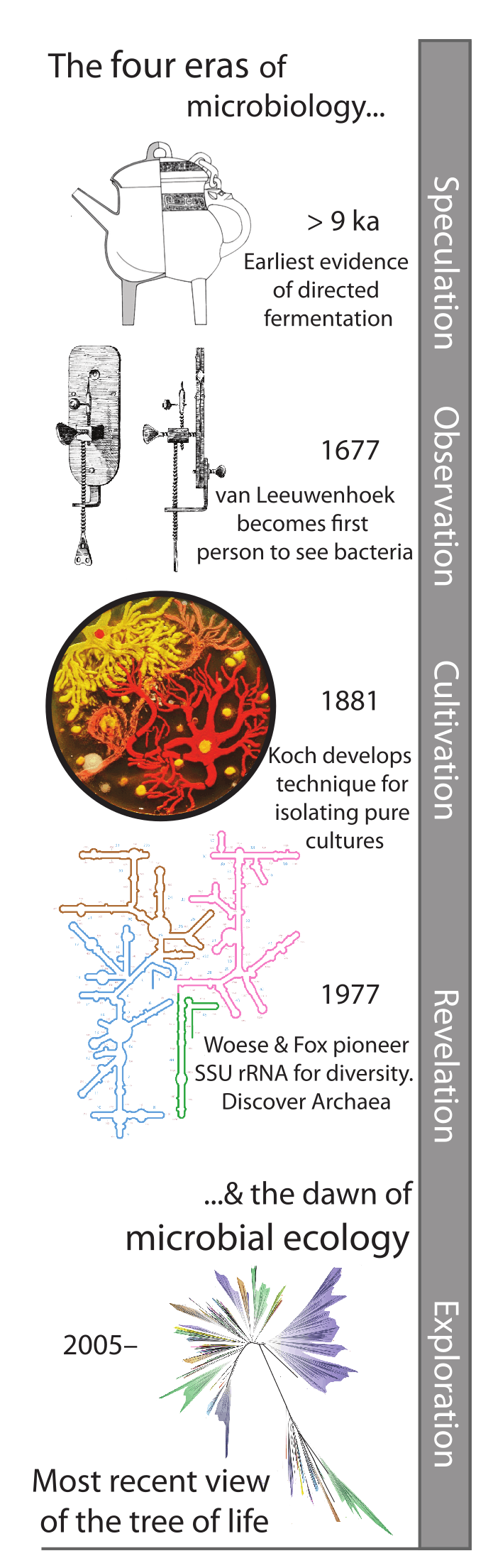
SPECULATION: Two thousand years before humans started growing crops and raising livestock, semi-sedentary foraging communities in Scandinavia were using microorganisms to ferment large quantities of fish for storage and later use (Boethius 2016Boethius (2016). Something rotten in Scandinavia: The world’s earliest evidence of fermentation), while artisans in northern China were cultivating microbes to create fermented beverages from a mixture of rice, fruit, and honey (McGovern et al. 2004McGovern et al. (2004). Fermented beverages of pre- and proto-historic China). In fact newer evidence suggests that peoples in the Southern Levant were brewing a cereal-based beer almost 13,000 years ago (Liu et al. 2018Liu et al. (2018). Fermented beverage and food storage in 13,000 y-old stone mortars at Raqefet Cave, Israel: Investigating Natufian ritual feasting), several millennia before the appearance of domesticated cereals in the Near East.
Fermentation is used to detoxify and preserve food, increase nutrient availability, and because many ferments have anesthetic, antimicrobial, and antiseptic properties, they are important medicinal devices (McGovern et al. 2010McGovern et al. (2010). Anticancer activity of botanical compounds in ancient fermented beverages (Review)). Microbial fermentation played an important role in human history, and today vibrant fermentative traditions endure as key cultural elements around the world. It seems that ancient humans were domesticating microbes long before plants and animals, enriching specific microbial assemblages and promoting desired metabolic processes—humanity’s first experimental microbiologists. Remarkably, there is no evidence that ancient peoples were aware that microscopic life was responsible for these chemical transformations.
OBSERVATION: It would take another eight and a half millennia until, in 1677, a Dutch merchant and amateur glass grinder used his handmade microscope to observe and describe bacteria for the first time (Lane 2015Lane (2015). The unseen world: reflections on Leeuwenhoek (1677) ‘Concerning little animals’). Over the next 300 years, more sophisticated and powerful microscopes were developed allowing researchers to study this mysterious world in greater detail. One thing microscopy revealed, especially for bacteria and archaea, was that microbes do not exhibit the same diversity of physical forms as their macro counterparts—not even close. Given our history of using morphology to describe biodiversity, this unsurprisingly led to the premature notion that microbes were simple and minor players in natural systems.
CULTIVATION: The beginning of modern day microbiology began with the advent of culture-based techniques in the late 1800’s. This allowed scientists to isolate pure cultures of microbes for the first time (Collard 1976Collard (1976). The Development of Microbiology) and delve deeper into their physiological and metabolic properties, giving way to great advancements in biochemistry, genetics, and molecular biology. However, over time many in the field began to suspect that culture-based approaches only recovered a fraction of the microbes they were observing with microscopy, which in turn was limited by the lack of morphological diversity.
REVELATION: Despite the efforts of early 20th century pioneers (reviewed in CollardCollard (1976). The Development of Microbiology (1976); Van NielVan Niel (1949). The “Delft School” and the rise of general microbiology (1949)), microbiology remained rooted in the reductionist belief that microbes were just “bags of interesting biochemistry” ignoring the implications of ecological and evolutionary processes in the microbial world (Woese & Goldenfeld 2009Woese & Goldenfeld (2009). How the microbial world saved evolution from the Scylla of molecular biology and the Charybdis of the modern synthesis). All that changed beginning in 1977 when Carl Woese and George Fox published a series landmark papers outlining the use of the ribosomal RNA as a universal marker gene (Fox et al. 1977Fox et al. (1977). Classification of methanogenic bacteria by 16S ribosomal RNA characterization; Balch et al. 1977Balch et al. (1977). An ancient divergence among the bacteria). While they were at, it they also described an entirely new branch of life: the archaea (Woese & Fox 1977Woese & Fox (1977). Phylogenetic structure of the prokaryotic domain: The primary kingdoms). To say this work was groundbreaking would be an understatement. Woese & Fox toppled the old paradigms and pulled back the veil, revealing a microbial world far more diverse than most people were ready to accept (Mayr 1998Mayr (1998). Two empires or three?; Morell 1997Morell (1997). Microbial Biology: Microbiology’s Scarred Revolutionary). Eventually, the validity of their finding took root and today it is universally agreed that microbes—viruses, bacteria, archaea, and single-celled eukaryotes—are extremely diverse and crucial agents in all planetary systems.
EXPLORATION: So here we are, some ten thousand years after humans first began harnessing the power of microbes, at the dawning of a new era in biology. Equipped with next (now 2nd) generation sequencing technology (Margulies et al. 2005Margulies et al. (2005). Genome sequencing in microfabricated high-density picolitre reactors) and high-performance computing, we exploring nature anew, in ways that were not possible even fifteen years ago. The most recent estimate of diversity and newest tree of life is simply astonishing: 92 bacterial phyla, 26 archaeal phyla, and 5 Eukaryotic supergroups (Hug et al. 2016Hug et al. (2016). A new view of the tree of life). Continuing advances in portable sequencing technology (e.g., Oxford Nanopore’s MinIon) is helping microbial ecology become a genuine field science and promises to democratize .
The history of microbial ecology is a bit like the story Flatland: A Romance of Many Dimensions (1884) by Edwin Abbott Abbott (1838–1926). Flatland is a tale about a two-dimensional world occupied by geometric figures (lines, triangles, squares, pentagons, etc.) who only perceive straight lines and angles—a world devoid of depth. Until one day the protagonist (a square) is given a new perspective by a three-dimensional outsider (a sphere) and must change the way he views the world. Flatland challenges our perspective and so too does microbial world.
References
- Anand, M. (1994). Pattern, process and mechanism - the fundamentals of scientific inquiry applied to vegetation science. Coenoses, 9(2): 81–92.
- Balch, W., Magrum, L., Fox, G., Wolfe, R., Woese, C. (1977). An ancient divergence among the bacteria. Journal of Molecular Evolution, 9(4): 305–311. https://doi.org/10.1007/BF01796092
- Benson, K. (2000). The emergence of ecology from natural history. Endeavour, 24(2): 59–62. https://doi.org/10.1016/S0160-9327(99)01260-0
- Collard, P. (1976). The Development of Microbiology.
- Egerton, F. (2002). A History of the Ecological Sciences, Part 5: Byzantine Natural History. Bulletin of the Ecological Society of America, 83(1): 89–94.
- Ereshefsky, M. (2010). Microbiology and the species problem. Biology & Philosophy, 25(4): 553–568. https://doi.org/10.1007/s10539-010-9211-9
- Falkowski, P., Fenchel, T., Delong, E. (2008). The microbial engines that drive Earth's biogeochemical cycles. Science, 320(5879): 1034–1039. https://doi.org/10.1126/science.1153213
- Fox, G., Magrum, L., Balch, W., Wolfe, R., Woese, C. (1977). Classification of methanogenic bacteria by 16S ribosomal RNA characterization. Proceedings of the National Academy of Sciences, 74(10): 4537–4541. https://doi.org/10.1073/pnas.74.10.4537
- Gogarten, J., Townsend, J. (2005). Horizontal gene transfer, genome innovation and evolution. Nature Reviews Microbiology, 3(9): 679–687. https://doi.org/10.1038/nrmicro1204
- Hug, L., Baker, B., Anantharaman, K., Brown, C., Probst, A., Castelle, C., Butterfield, C., Hernsdorf, A., Amano, Y., Ise, K., Suzuki, Y., Dudek, N., Relman, D., Finstad, K., Amundson, R., Thomas, B., Banfield, J. (2016). A new view of the tree of life. Nature Microbiology, 1(5): 16048. https://doi.org/10.1038/nmicrobiol.2016.48
- Jessup, C., Kassen, R., Forde, S., Kerr, B., Buckling, A., Rainey, P., Bohannan, B. (2004). Big questions, small worlds: microbial model systems in ecology. Trends in Ecology & Evolution, 19(4): 189–197. https://doi.org/10.1016/j.tree.2004.01.008
- Lane, N. (2015). The unseen world: reflections on Leeuwenhoek (1677) ‘Concerning little animals’. Philosophical Transactions of the Royal Society B: Biological Sciences, 370(1666): 20140344. https://doi.org/10.1098/rstb.2014.0344
- Liu, L., Wang, J., Rosenberg, D., Zhao, H., Lengyel, G., Nadel, D. (2018). Fermented beverage and food storage in 13,000 y-old stone mortars at Raqefet Cave, Israel: Investigating Natufian ritual feasting. Journal of Archaeological Science: Reports, 21: 783–793. https://doi.org/10.1016/j.jasrep.2018.08.008
- Margulies, M., Egholm, M., Altman, W., Attiya, S., Bader, J., Bemben, L., Berka, J., Braverman, M., Chen, Y., Chen, Z., Dewell, S., Du, L., Fierro, J., Gomes, X., Godwin, B., He, W., Helgesen, S., Ho, C., Irzyk, G., Jando, S., Alenquer, M., Jarvie, T., Jirage, K., Kim, J., Knight, J., Lanza, J., Leamon, J., Lefkowitz, S., Lei, M., Li, J., Lohman, K., Lu, H., Makhijani, V., McDade, K., McKenna, M., Myers, E., Nickerson, E., Nobile, J., Plant, R., Puc, B., Ronan, M., Roth, G., Sarkis, G., Simons, J., Simpson, J., Srinivasan, M., Tartaro, K., Tomasz, A., Vogt, K., Volkmer, G., Wang, S., Wang, Y., Weiner, M., Yu, P., Begley, R., Rothberg, J. (2005). Genome sequencing in microfabricated high-density picolitre reactors. Nature, 437(7057): 376–380. https://doi.org/10.1038/nature03959
- Martiny, J., Bohannan, B., Brown, J., Colwell, R., Fuhrman, J., Green, J., Horner-Devine, M., Kane, M., Krumins, J., Kuske, C., Morin, P., Naeem, S., Øvreås, L., Reysenbach, A., Smith, V., Staley, J. (2006). Microbial biogeography: putting microorganisms on the map. Nature Reviews Microbiology, 4(2): 102–112. https://doi.org/10.1038/nrmicro1341
- Mayr, E. (1998). Two empires or three?. Proceedings of the National Academy of Sciences, 95(17): 9720–9723. https://doi.org/10.1073/pnas.95.17.9720
- McFall-Ngai, M., Hadfield, M., Bosch, T., Carey, H., Domazet-Lošo, T., Douglas, A., Dubilier, N., Eberl, G., Fukami, T., Gilbert, S., Hentschel, U., King, N., Kjelleberg, S., Knoll, A., Kremer, N., Mazmanian, S., Metcalf, J., Nealson, K., Pierce, N., Rawls, J., Reid, A., Ruby, E., Rumpho, M., Sanders, J., Tautz, D., Wernegreen, J. (2013). Animals in a bacterial world, a new imperative for the life sciences. Proceedings of the National Academy of Sciences, 110(9): 3229–3236. https://doi.org/10.1073/pnas.1218525110
- McGovern, P., Christofidou-Solomidou, M., Wang, W., Dukes, F., Davidson, T., El-Deiry, W. (2010). Anticancer activity of botanical compounds in ancient fermented beverages (Review). International Journal of Oncology, 37(1): 5–14. https://doi.org/10.3892/ijo_00000647
- McGovern, P., Zhang, J., Tang, J., Zhang, Z., Hall, G., Moreau, R., Nuñez, A., Butrym, E., Richards, M., Wang, C., Cheng, G., Zhao, Z., Wang, C. (2004). Fermented beverages of pre- and proto-historic China. Proceedings of the National Academy of Sciences, 101(51): 17593–17598. https://doi.org/10.1073/pnas.0407921102
- Morell, V. (1997). Microbial Biology: Microbiology's Scarred Revolutionary. Science, 276(5313): 699–702. https://doi.org/10.1126/science.276.5313.699
- Pike, A., Hoffmann, D., García-Diez, M., Pettitt, P., Alcolea, J., De Balbín, R., González-Sainz, C., De Las Heras, C., Lasheras, J., Montes, R., Zilhão, J. (2012). U-Series dating of paleolithic art in 11 caves in Spain. Science, 336(6087): 1409–1413. https://doi.org/10.1126/science.1219957
- Prosser, J., Bohannan, B., Curtis, T., Ellis, R., Firestone, M., Freckleton, R., Green, J., Green, L., Killham, K., Lennon, J., Osborn, A., Solan, M., Gast, C., Young, J. (2007). The role of ecological theory in microbial ecology. Nature Reviews Microbiology, 5(5): 384–392. https://doi.org/10.1038/nrmicro1643
- Sela, I., Wolf, Y., Koonin, E. (2016). Theory of prokaryotic genome evolution. Proceedings of the National Academy of Sciences, 113(41): 11399–11407. https://doi.org/10.1073/pnas.1614083113
- Tyson, G., Chapman, J., Hugenholtz, P., Allen, E., Ram, R., Richardson, P., Solovyev, V., Rubin, E., Rokhsar, D., Banfield, J. (2004). Community structure and metabolism through reconstruction of microbial genomes from the environment. Nature, 428(6978): 37–43. https://doi.org/10.1038/nature02340
- Van Niel, C. (1949). The “Delft School” and the rise of general microbiology. Bacteriological Reviews, 13(3): 161–174. https://doi.org/10.1128/br.13.3.161-174.1949
- Woese, C., Goldenfeld, N. (2009). How the microbial world saved evolution from the Scylla of molecular biology and the Charybdis of the modern synthesis. Microbiology and Molecular Biology Reviews, 73(1): 14–21. https://doi.org/10.1128/MMBR.00002-09
- Woese, C., Fox, G. (1977). Phylogenetic structure of the prokaryotic domain: The primary kingdoms. 74(11): 5088–5090. https://doi.org/10.1073/pnas.74.11.5088